Web3 Connection

Select a wallet to connect
Connect your wallet to continue
New to wallets?Learn more
 Connect
Connect your wallet to continue
![“‘AI Never Sleeps’: YouthMeta Launches 24/7 Crypto Market Risk Radar [Herald Money Festa 2025]”](https://vobc-image-bucket.s3.ap-northeast-2.amazonaws.com/thumbnails/fb47d782-52f3-48bf-8ba6-b1e22e9d7497.png)
Bitcoin Rises as ‘Digital Gold,’ with Institutional and Corporate Holdings at 3.9 Million BTC High Volatility and Liquidation Risks Leave Only 2–3% of Traders Profitable ‘AI Never Sleeps and Lacks Emotion,’ Filling the Gaps of Human Decision-Making
[Herald Economy = Reporters Kim Yoo-jin and Kyung Ye-eun]
“Without collaboration between AI backed by long-term data and experience, and seasoned experts, successful cryptocurrency investing is difficult.”
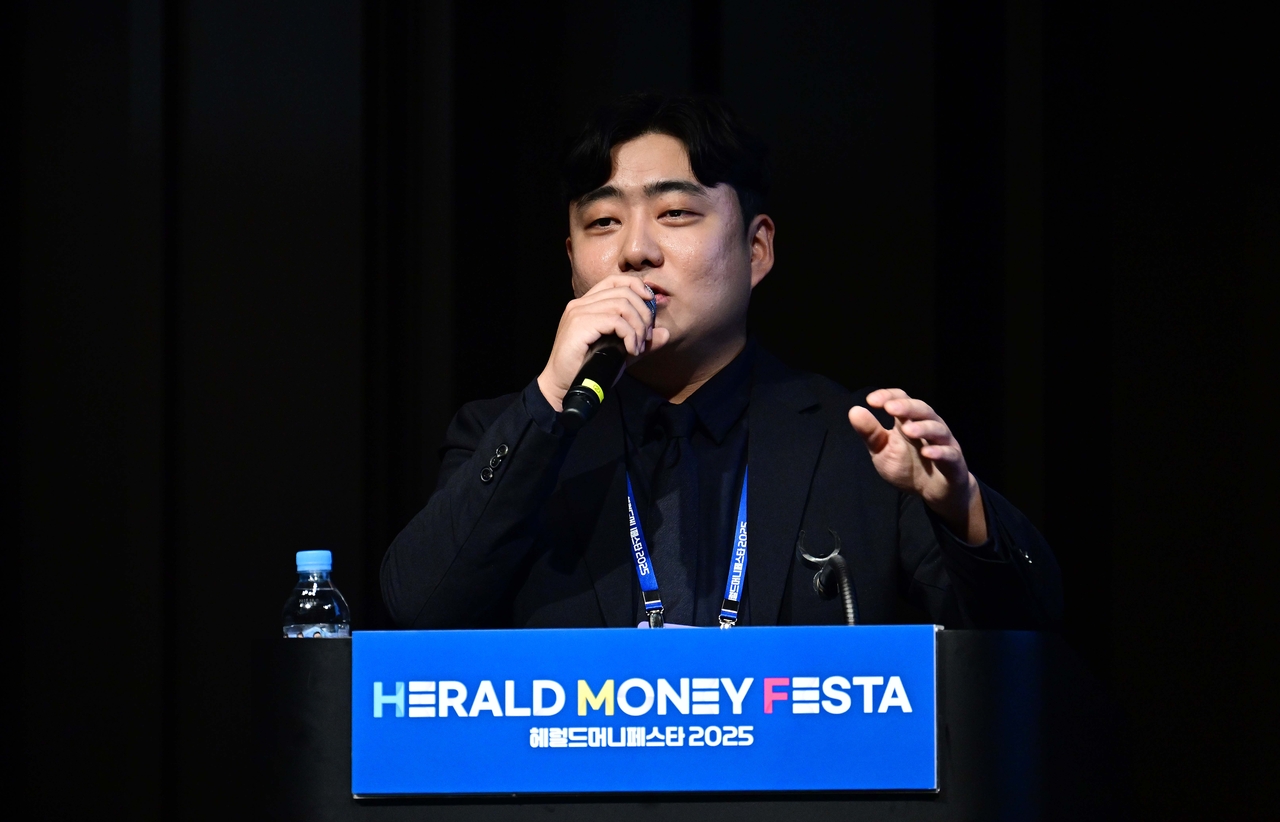
Moon-chang Choi, Executive Director of the Global Planning Team at YouthMeta, made the remarks while speaking on the lecture stage at Herald Money Festa 2025, held on the 16th at the Grand Ballroom of COEX in Seoul. His talk was titled “Cryptocurrency Investment Strategies in the Age of AI.”
Since 2016, YouthMeta has positioned itself as a “navigator of the cryptocurrency market,” providing AI-driven data analysis services designed to help investors understand market trends and independently manage risk. Choi emphasized that “AI is a risk-management partner that eliminates emotion and analyzes the market 24 hours a day.”
During his presentation, Choi highlighted Bitcoin’s shifting status, noting, “Until 2017, BlackRock CEO Larry Fink dismissed Bitcoin as a ‘money-laundering indicator,’ but today it is recognized as ‘digital gold’ and a mechanism capable of transforming the financial system.”
He added, “El Salvador became the first country to designate Bitcoin as legal tender in 2021, while the United States is establishing regulatory frameworks through the GENIUS Act and the Clarity Act. The European Union has completed an institutional framework allowing refunds, insurance, and payments through the implementation of the Markets in Crypto-Assets (MiCA) regulation.” He also noted that the United Kingdom is preparing legislation to recognize stablecoins as a means of payment, concluding that “cryptocurrencies have firmly established themselves as a new form of currency and asset class.”
According to Choi, the changing perception of Bitcoin is evident in growing participation by corporations and institutional investors. Governments, companies, and institutions are estimated to hold around 3.9 million bitcoins—worth approximately $450.4 billion (about 640 trillion won). “MicroStrategy holds about 630,000 bitcoins, with its stock price surging nearly 30-fold over the past five years,” he said. “Japan’s Metaplanet converted post-COVID assets into Bitcoin to drive growth, and Tesla has adopted Bitcoin as a vehicle payment option.”
However, Choi cautioned against the darker side of the market, citing events such as the Terra–Luna collapse in May 2022, the FTX bankruptcy in November 2022, and the liquidation crisis of October 11, 2025, as examples of how easily individual investors can suffer losses. “People are instinctively inclined to take profits quickly while holding onto losses,” he said. “With leverage of up to 125x, a market that operates 24/7, and perpetual futures with no expiration, emotionally driven decisions often lead to cumulative losses.”
YouthMeta’s services aim to compensate for these human shortcomings through AI. “AI has no emotions and never sleeps—it fills the gaps humans often miss,” Choi explained. “Our AI continuously collects data around the clock, integrating news, indicators, and social media issues in real time. Even during sudden market shifts, it is designed to automatically detect variables and respond.”
Choi introduced YouthMeta’s AI signal algorithm, which generates trading signals by multilayered analysis of real-time crypto market data. On-chain analysis tracks fund flows between blockchain “whale” wallets and exchanges to detect potential selling pressure from large capital movements. Order-book and position data monitor pending orders, liquidation levels, and volume spikes to assess short-term supply and demand changes. Machine learning models study historical price patterns, scoring recurring movements and generating buy (L) and sell (S) signals—further classified into levels such as L2 (strong bullish) and S2 (strong bearish) to suggest optimal timing.
“In particular, when large volumes of Bitcoin move from whale wallets to exchanges, the AI interprets this as a signal of increasing sell pressure,” Choi said. “The system detects such flows instantly and proposes response strategies.”
Currently, YouthMeta operates services centered on AI charts and alert applications. Key offerings include real-time notifications when signals occur, an “AI Briefing” that summarizes market news and social media issues at 9 a.m. and 9 p.m., and a “Daily Report” in which in-house traders analyze chart signals.
Choi also revealed plans to expand beyond chart and alert services into consulting and asset management for individuals and institutions. “We are preparing an ‘Auto Order’ system that automatically executes trades based on AI signals, as well as generative AI–based investment assistant features that propose portfolios tailored to investor profiles,” he said.
Concluding, Choi stressed, “While institutional adoption and capital inflows are increasing, information asymmetry and volatility remain. Minimizing risk requires AI equipped with long-term data, working alongside experts with accumulated experience.”
韓国初の経済紙として、Herald Businessはその長い歴史と伝統を基盤に、経済分野で主導的な役割を果たしてきました。Herald Businessは「Content First, Business First」をモットーに掲げ、企業および読者の双方に向けて、徹底した経済分析と信頼できる情報を提供することを最優先としています。1952年に新聞『第一新報(Jeil Shinbo)』が創刊され、1954年に『産業経済新聞(Industrial Economy Newspaper)』へ改称されました。1973年には韓国貿易協会に買収され、『The Daily Naewoe Economic Newspaper』となりました。同年、The Korea Heraldが同紙を発行し、2003年にHerald Businessへと改称されました。Herald Businessは韓国を代表する主要なビジネスニュース媒体の一つです。主に行政およびビジネス分野を中心に扱いながら、文化やエンターテインメントに関するコンテンツも掲載しています。


